She Didn't Think Twice About Her Floors, Until She Learned What They Were Doing to Her Dog's Spine

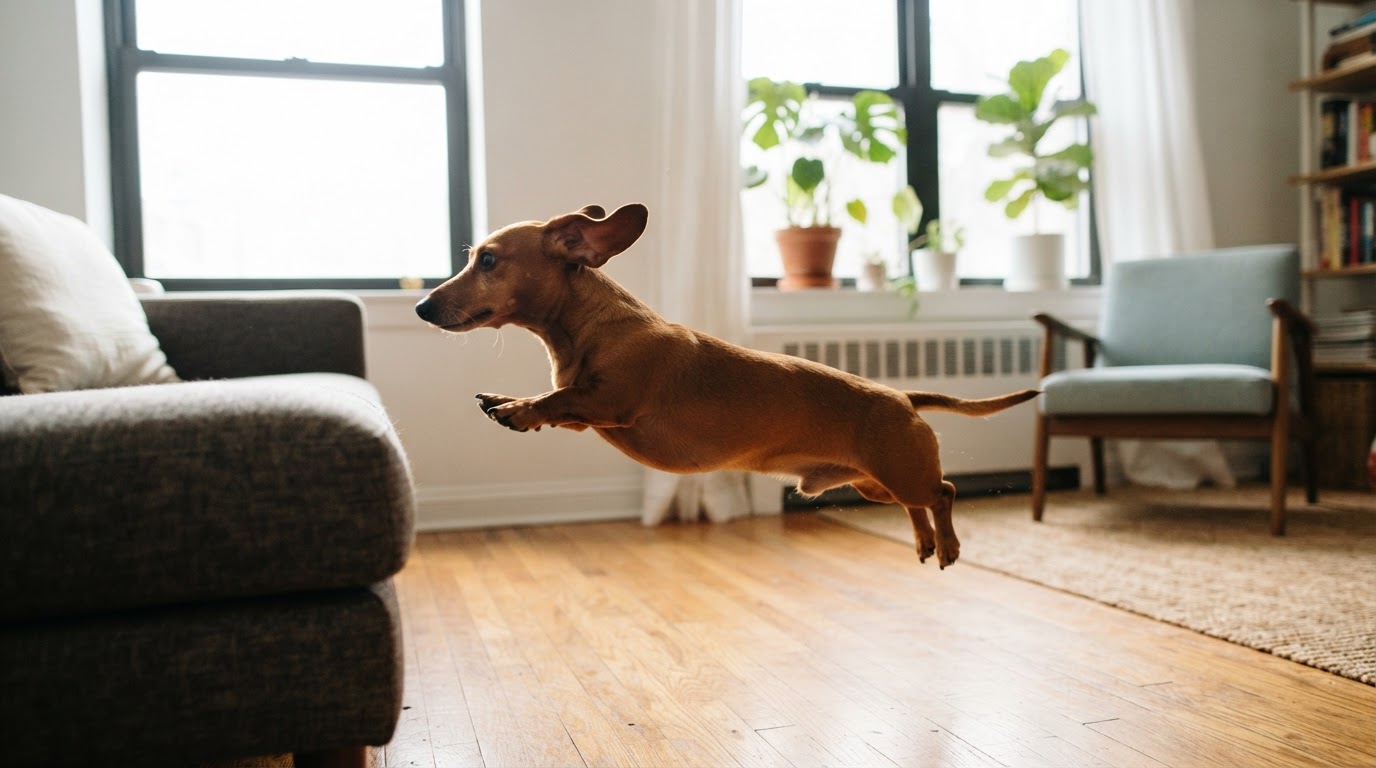
You already watch out for the big things. The chocolate on the counter. The open gate. The stairs when he's a puppy.
But most dog moms have never thought twice about something as ordinary as hardwood floors, until they learn what repeated slipping actually does to a dog's joints and spine over time.
For most dogs, an occasional slip isn't a crisis. But for some, especially Dachshunds, it's a much bigger deal than it looks.
The condition every Dachshund mom eventually hears about

If you have a Dachshund, you've probably already heard the word: IVDD. Intervertebral disc disease. It's not internet paranoia, it's one of the most documented conditions in veterinary medicine, first described in a Dachshund back in the late 1800s, formally classified by the 1950s, and finally traced to its exact genetic cause in 2017 by researchers at UC Davis.
The same gene that gives Dachshunds their unmistakable short legs also means their spinal discs get less cushioning than almost any other breed, and wear out faster.

Roughly 1 in 4 Dachshunds develop clinically significant IVDD in their lifetime, most often between ages 3 and 7, right in the middle of their boldest, most fearless years. And Dachshunds are famous for hiding pain, so the early signs (a hesitation before jumping, a slightly arched back, an off day) are easy to miss until they're not.
Treatment, when it's needed, runs $2,000 to $12,000. But the number that actually keeps owners up at night isn't the bill. It's the thought of looking back and wondering if there was something they could have done.
There's no product that changes your dog's genetics. Nothing prevents IVDD outright, and we won't pretend otherwise.
The one thing you can actually do something about
Every slip on hardwood or tile adds strain to a spine that already has less give than it should. Vets consistently point to this as one of the only genuinely controllable risk factors in the whole picture. Think of it as a seatbelt for your dog's spine: it doesn't prevent the accident, it softens what happens in the moment things go wrong.
That's true whether your dog is a Dachshund, a Corgi, a Frenchie, a senior Lab with achy hips, or a big dog who just loves sprinting across the kitchen. Slipping is hard on joints and spines across the board, it's just a much higher-stakes issue for short-legged, IVDD-prone breeds.
Why most traction socks let you down anyway
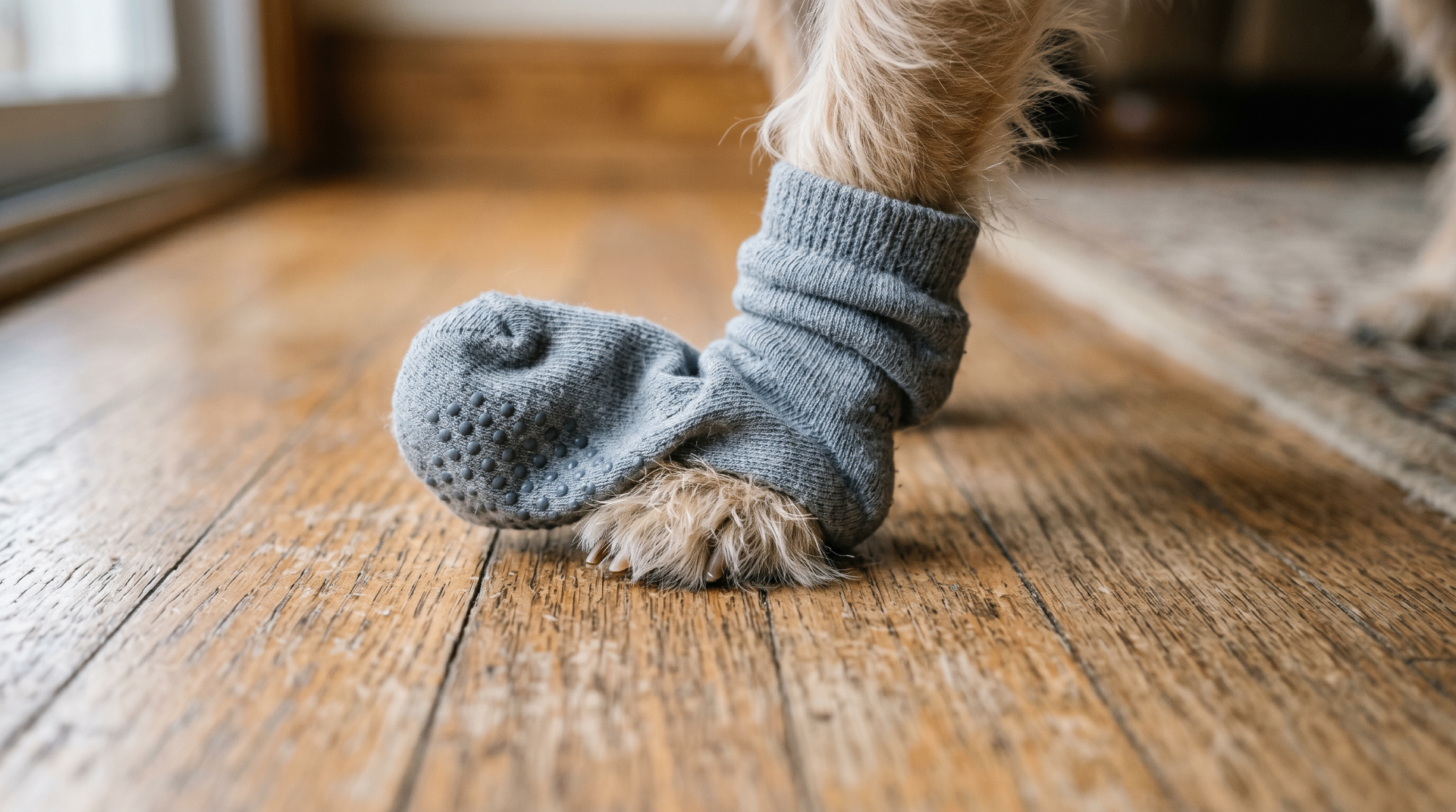
If you've tried socks before, you already know the complaint: they twist, bunch, or slide off within the first walk. That's because most are sized around an average dog's paw and gait, and no dog on your couch is "average."
Grippy Paws was built around actual breed proportions instead: sized for short-legged, higher-risk breeds (Dachshunds, Corgis, Basset Hounds, French Bulldogs, Beagles) and now available in sizing for medium and large dogs too, so the fit is right whether you've got a 12-pound wiener dog or an 80-pound lab.
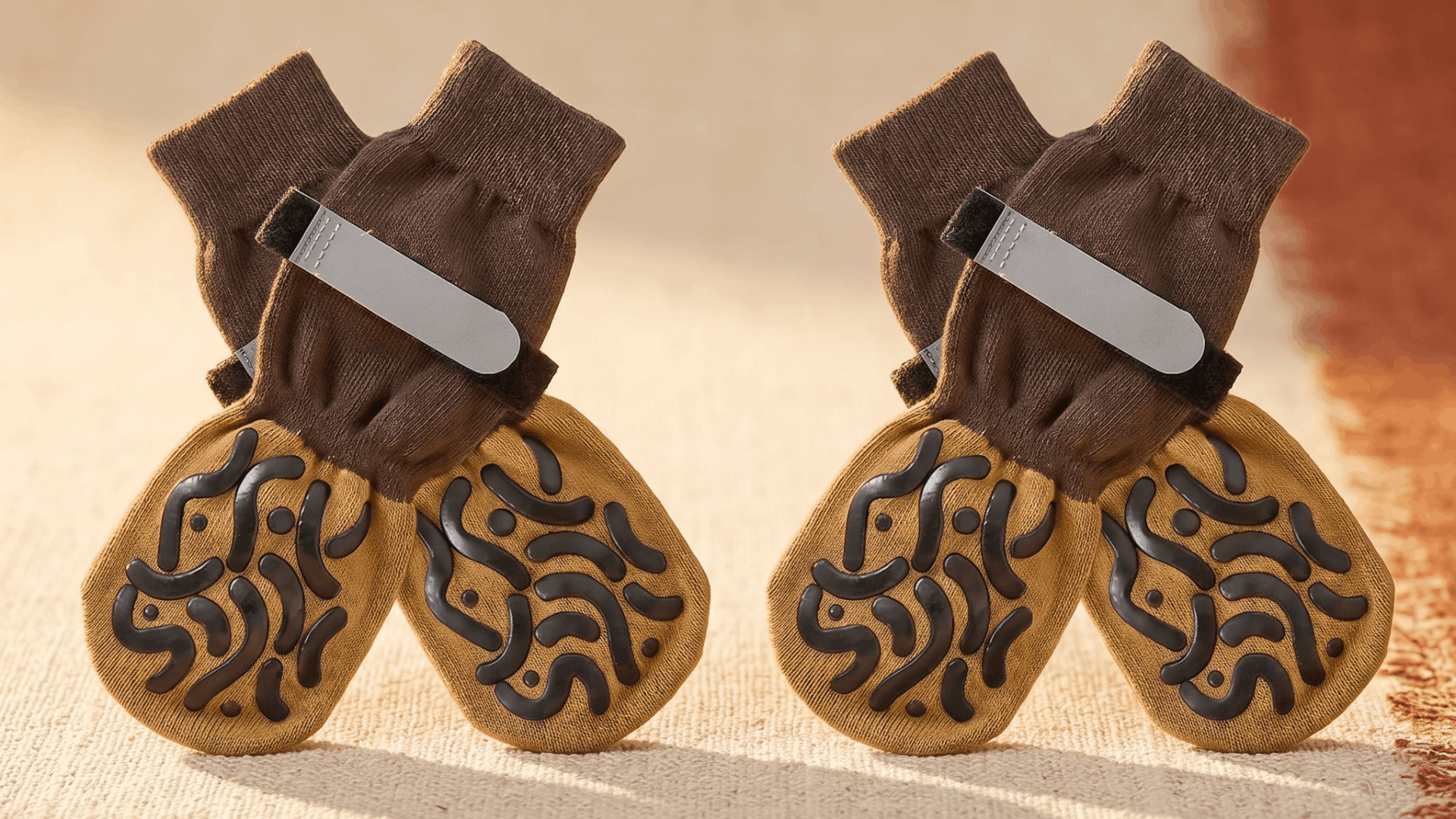
- 4-pack, breathable cotton/spandex
- 360° grip texture, not just a flat pad on one side
- $19.99
- 30-day fit guarantee, no questions asked
No study has tested traction socks against IVDD or joint outcomes directly, and we're not going to claim one has. What we do know: less slipping means less repeated strain on a body that's already working with less margin. For $20, it's a small, honest way to take one variable off your plate.
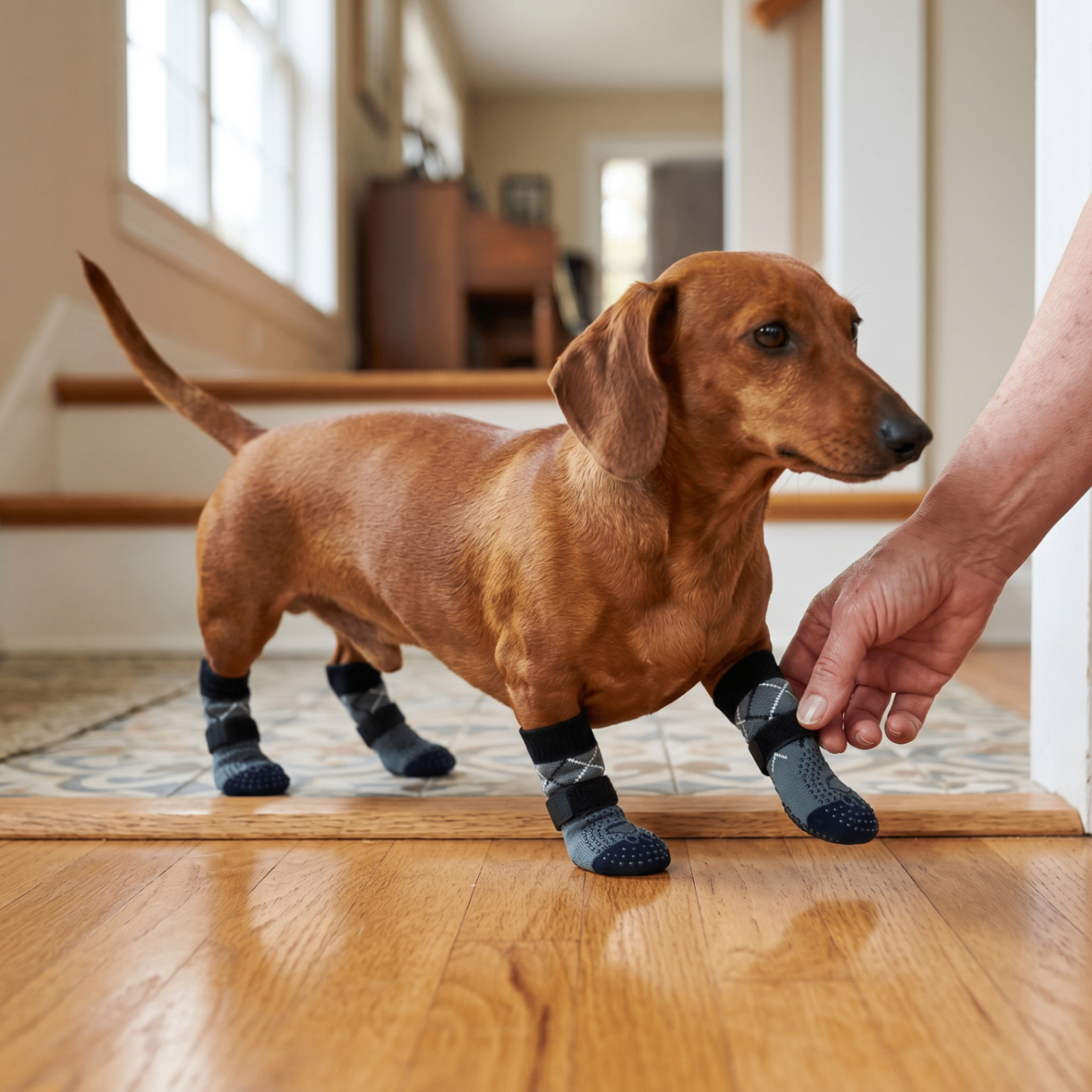
You already do everything you can to protect your dog. This is one more thing you actually can.